
Canada-China canola deal draws praise from leaders and industry
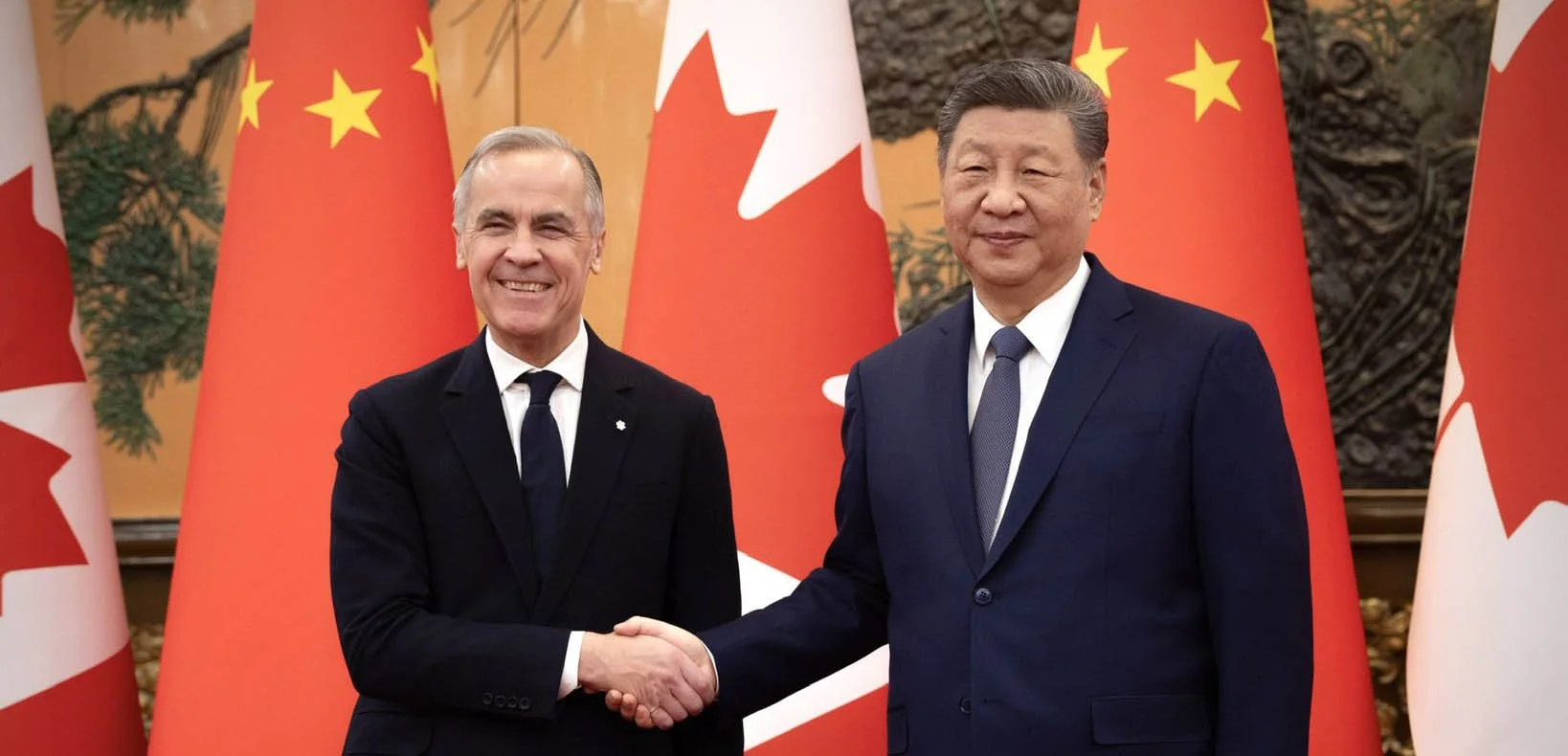
Prime Minister Mark Carney pictured with President of China Xi Jinping. / TWITTER PHOTO
Prime Minister Mark Carney has reached a preliminary trade agreement with China that could provide a major boost for Canadian agriculture, particularly the canola sector, while allowing tens of thousands of Chinese electric vehicles (EVs) into the Canadian market.
Saskatchewan Premier Scott Moe called the agreement “one of the strongest agreements that I have seen in my elected time,” noting it will benefit Saskatchewan farmers, exporters, and processing workers. He credited Prime Minister Mark Carney for his role, saying Carney “engaged earnestly, with at all levels of the Chinese government.”
“This outcome demonstrates what focused, persistent, high-level engagement can achieve,” said Greg Cherewyk, President of Pulse Canada, in a statement. “Re-establishing access to China provides immediate commercial opportunities while strengthening Canada’s position as a trusted supplier of high-quality, nutritious, and sustainable food ingredients.”
Federal Agriculture Minister Heath MacDonald highlighted the speed of Chinese purchases under the deal. “That’s how quickly this whole process has taken place,” he said, noting that Chinese importers have already ordered 60,000 metric tonnes of Canadian canola seed and a company is shipping its first load of Canadian beef to China next week.
The deal, announced Jan. 16, 2026, cuts canola seed tariffs from roughly 84 per cent to 15 per cent by March and removes anti-discrimination tariffs on canola meal, lobsters, crabs, and peas through at least the end of the year. Carney called it “preliminary but landmark,” adding: “That’s enormous progress. Farmers in the Prairies, manufacturers and engineers in Ontario, miners in Quebec, [and] harvesters in Atlantic Canada all depend on trade with China.”
China is currently Canada’s second-largest export market and third-largest investor, with an estimated $50 billion invested in the country in 2024. Carney’s Jan. 13-17 trip marked the first official invitation for a Canadian prime minister since 2017 – a milestone in bilateral relations. Joined by key cabinet ministers, the mission focused on trade, energy, and clean technology, but the resolution of long-standing canola trade barriers emerged as the central win for Prairie farmers and rural exporters.
China-Canada trade tensions ease
The canola industry has been hit hard by retaliatory tariffs after Canada imposed 2024 duties on Chinese EVs. Beijing responded with levies on more than $2.6 billion in Canadian farm and food products, including canola oil, meal, and peas, culminating in 76 per cent duties on canola seed by August 2025.
Foreign Affairs Minister Anita Anand framed the deal as part of Canada’s strategy to diversify trade partners. “In this moment of economic stress, it is necessary to grow non-U.S. trade by at least 50 per cent over the next 10 years. China is certainly high on the list of countries where we need to sit at the table and negotiate,” she said in a Jan. 14 press conference.
Industry Minister Mélanie Joly emphasized that Canada cannot control global markets but can control its trade partners. “Who we do business with is something we can control. That’s exactly what markets and businesses are looking for: stability, reliability,” she told reporters in Beijing.
Energy cooperation and clean technology
Energy and clean technology were front and centre in the Canada-China talks, with ministers framing cooperation as a pathway to both economic growth and Canada’s net-zero goals. Officials confirmed a memorandum of understanding (MOU) with China’s National Energy Administration (NEA) covering conventional and clean energy. Natural Resources Minister Tim Hodgson highlighted China’s interest in Canadian liquefied natural gas (LNG), which he called the “lowest carbon-intensity LNG in the world.”
“They are looking for reliable trading partners; trading partners that don’t use energy for coercion,” he said alongside Joly in Beijing, signaling opportunities for long-term export stability.
Chinese investment in the oil sands also came under discussion. Joly stressed that any new or expanded projects will be assessed under the recently strengthened Investment Canada Act, ensuring national security and economic safeguards.
Clean technology and energy storage were flagged as key growth areas. Deployments of Chinese battery manufacturer CATL’s grid-scale storage systems in Ontario were positioned as tools to turn intermittent renewable energy into reliable baseload power, helping lower costs and accelerate Canada’s transition to net zero. “If we can use that technology to help us get to net zero in a more affordable way, that’s good for Canada,” Hodgson said. Discussions also explored battery manufacturing, building on existing investments such as Volkswagen in St. Thomas, Ont., and LG–Stellantis in Windsor – positioning Canada as a hub for both innovation and strategic energy-transition supply chains.
The EV trade-off
The agricultural component came with a strategic concession: Canada will allow up to 49,000 Chinese EVs into the domestic market each year at a 6.1 per cent tariff, returning to pre‑2024 levels. Carney said the adjustment is intended to “make some EVs more affordable for Canadians” while encouraging collaboration with Chinese manufacturers. “To build our own competitive EV sector, we need to learn from, partner with, and access supply chains with China,” he said.
The policy drew criticism from Ontario Premier Doug Ford, who warned of “a flood of cheap made-in-China electric vehicles without any real guarantee of equal or immediate investments in Canada’s economy, auto sector or supply chain.”
Wider economic implications
The canola agreement is the first step in a broader Canada-China Strategic Partnership Roadmap, which aims to double Canadian exports to China by 2030. Beyond canola, the roadmap includes agreements on food safety, animal and plant health, and wood products, with total agricultural and seafood exports to China reaching $13.4 billion in 2024.
Carney also highlighted Canada’s strengths in energy and innovation, including an over 80 per cent clean electricity grid and plans to double capacity through nuclear, hydro, wind, and solar projects. He noted Canada’s growing role as a liquefied natural gas (LNG) exporter to Asia.
Anand cautioned that the relationship remains “complex”: “We will continue to have difficult conversations on human rights while building the Canadian economy,” she said.
Looking ahead
For Prairie farmers and rural exporters, the deal provides $4 billion in support, stabilizing markets and opening doors for long‑term growth. Carney framed the agreement as a turning point, describing it as “a partnership that reflects the world as it is today, ensuring our ties are not remnants of the past, but the foundations on which we build.”