
Deadzones, or dead-ends? Canada still struggling with lack of broadband connectivity
UNSPLASH PHOTO
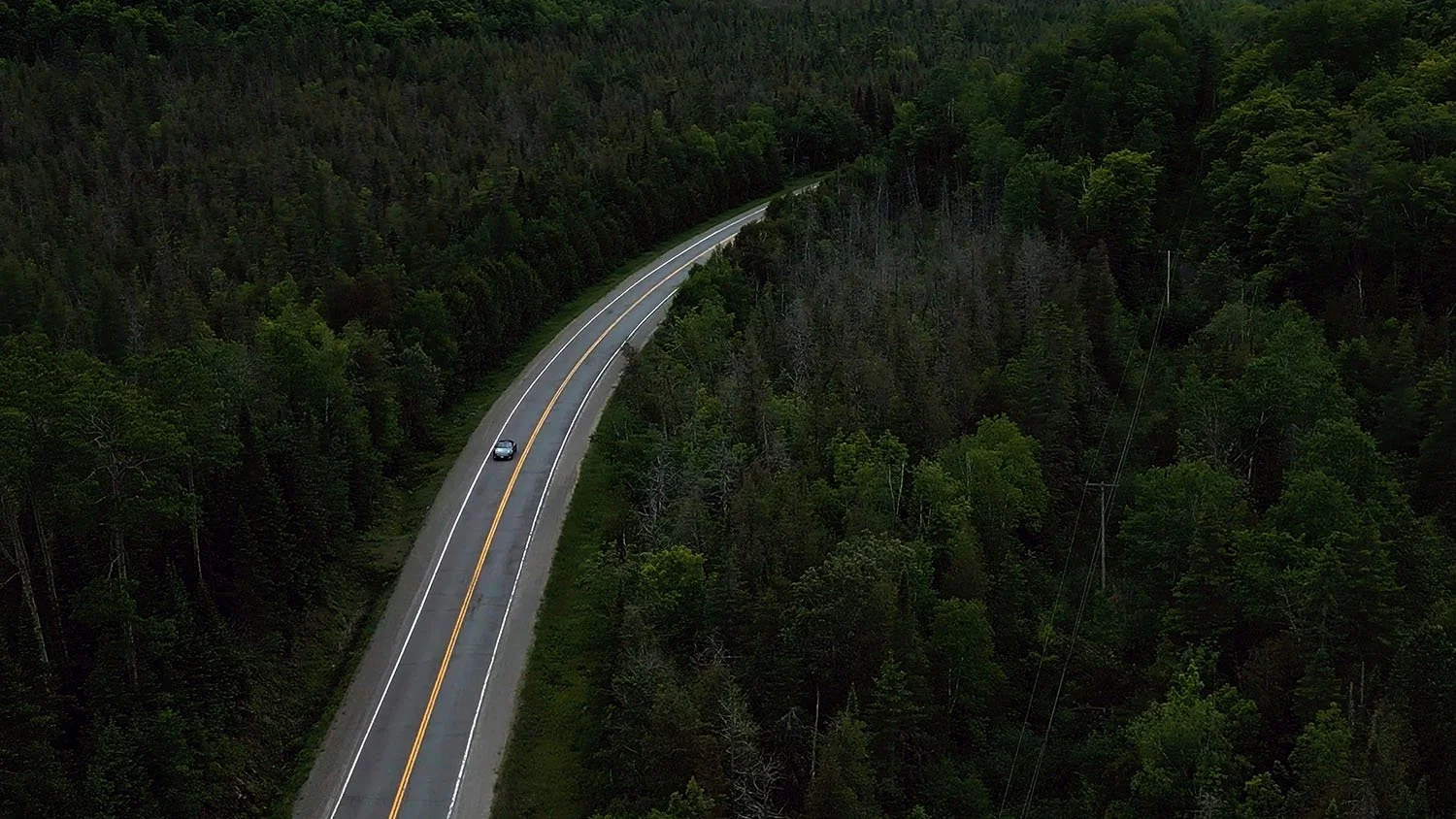
When Jen Grundy leaves her home in Sioux Lookout, Ont., she knows that for most of her 45 minute drive down Highway 72 to buy groceries, or to take her toddler to swimming lessons, she is effectively unreachable.
“If something were to happen, for the majority of the commute, I cannot call for help,” Grundy told the Globe and Mail for their podcast The Decibel.
“It's just one of those situations where you would hope and pray that somebody comes by at some point while you're stranded, and that they're willing to help and or have the skills to help.”
Across Canada, 13 per cent of major roads are not covered by cell service, equating to almost 15,000 kilometers, despite 99.5 per cent of Canadians having coverage at home or at work.
“These dead zones are everywhere that you could drive. They're in remote and northern regions — they're even in cities,” said Jill Mahoney, investigative reporter for The Globe and Mail, in conversation with Decibel host Sherrill Sutherland and telecommunications reporter Irene Galea.
The infrastructure which provides cellular services are owned and built by private companies, such as Rogers, TELUS, or Bell, and are regulated by the federal government. The only exception to privatized telecommunications in Canada is SaskTel in Saskatchewan, a holdover from when there were more crown corporations providing telecom services.
Some provinces think the 13 per cent no-coverage figure, which doesn’t consider uncovered secondary highways, is an underestimate. The Canadian Radio-television and Telecommunications Commission (CRTC), the federal telecoms regulator, receives their data from estimates provided by telecoms companies in Canada.
Unsatisfied with the CRTC findings, which they said did not align with their residents’ on the ground experiences, Nova Scotia, British Columbia, PEI, and New Brunswick conducted their own studies. They found that cell phone dead zones were much more common than what federal data showed.
For example, in New Brunswick, the federal maps show that dead zones only encompass one per cent of New Brunswick’s highways. After its own research, the province found 17 per cent of roads have insufficient coverage.
“The New Brunswick finance minister Rene legacy told us that there's a lot of frustration caused by this discrepancy, and he encounters gaps himself while driving in both rural and urban areas in the province,” said Galea.
Following the provinces’ findings, the CRTC said it was reviewing its methodology, and hired a third-party consulting firm to study the issue.
The public-private debate
Building out full coverage to address the dead zones is expensive — they exist in large part due to the high costs required to fix them. Often, dead zones are sparsely populated and rural, which render the return on investments low.
“The population density economics just doesn't really work for telecom companies,” said Galea. “In their view, there isn't a strong business case to be made for building in these areas, so often they rely on government subsidies to build them out.”
There have been several instances where companies accepted government funding to grow infrastructure in certain parts of the country, but faced exponentially growing costs.
Earlier this year, Bell Canada backed out of a four year plan to bring internet and cell service to northern Labrador. While Ottawa had committed $32 million to the project initially, Bell said the cost had more than quadrupled, from an estimated cost of $25 million to $110 million. The costs would be too high for the company to burden, making the project unviable.
Despite being private, companies do contribute to building out and expanding their networks across the country, and contribute to federal funding through the Broadband Fund, which is collected by the CRTC. These funds are redistributed to telecom companies for targeted rural projects, which are often of a smaller size.
But governments, too, are not necessarily quick to jump on investments in broadband because of the costs. The debate is underpinned by tensions between the public and private sectors, and the balance of ensuring access to cellular service, and the need for there to be a strong business case.
Regulatory bottlenecks also get in the way of providing adequate cellular service. While approvals for telecommunications fall under federal jurisdiction, land use and permitting responsibilities fall to the provinces, or municipalities.
“So it's a really complicated issue with a lot of interconnected factors, and it's hugely expensive,” Mahoney added.
Looking forward, and up
While several provinces are taking matters into their own hands, committing millions of dollars to build more infrastructure, Galea suggested that money is not the only solution for governments to implement.
“Some people think that Ottawa should take a far greater role in expanding cell service, or else force the hand of industry and require expansion of cellular service on roads,” said Mahoney.
Through regulation, they could better enforce existing regulation requiring telecom companies to provide cell phone service in areas they own spectrum. Currently, Ottawa isn’t monitoring them closely enough to hold them accountable. If they did, Galea’s sources say rural coverage could improve.
Satellite coverage may also offer a new way forward. Modern smartphones possess integrated technology which enables them to connect with satellites directly, which has been a new development over the course of the last few years. Through these new abilities, companies such as Rogers and Bell have begun to launch new capabilities for texting by directly connecting with satellites, bypassing the requirement for cellular service.
However, the new technology is still evolving: it has limited capacities, and considerable concerns remain. Through satellites, there are currently no calling abilities. The services would also cost about $200 more a year for consumers.
Additionally, there has been concern from the government regarding interference with other spectrum frequencies, or if satellites would be able to support the current emergency notification system. As such, they are continuing to prioritize building out terrestrial services for broadband.
“This is them saying we're not completely comfortable with direct to satellite service yet — we're not convinced that this is a solution,” said Galea. “Maybe one day, but we're not there yet.”
Coverage gaps, however, remain a pressing issue, affecting ‘countless individuals every day,” from tourists, those impacted by natural disasters, and workers travelling on trade corridors, she added.
Since publishing their story in November, Mahoney said she and Galea have received dozens of emails from Canadians across the country, each with personal stories about not having service.
“This is a problem that affects Canadians from coast to coast,” she said.