Canadian agriculture investment is key to economic growth and security: Hendricks, Sunstrum
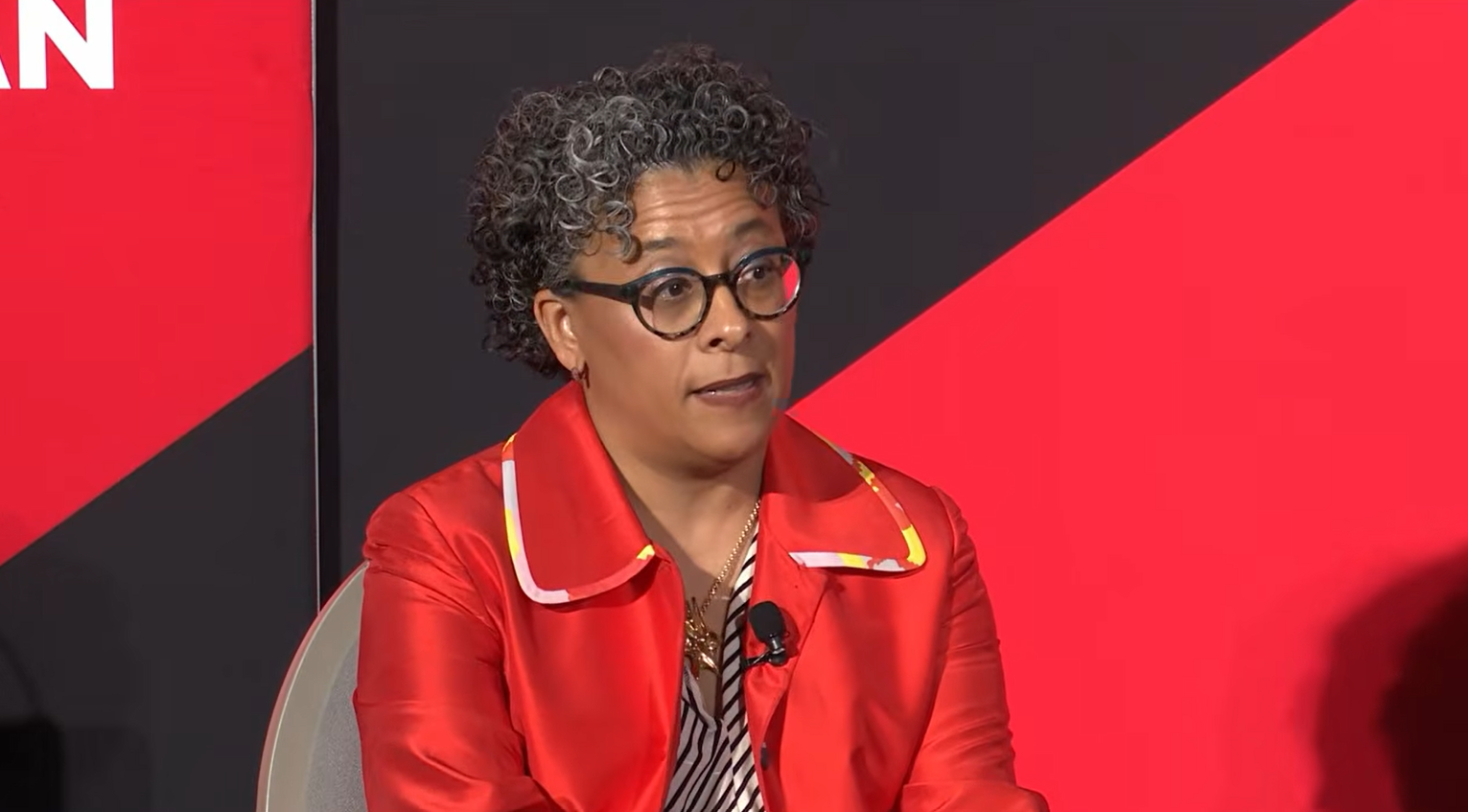
‘Agriculture and food, it's not just an urban opportunity, it's a rural opportunity,’ Justine Hendricks, President and Chief Executive Officer of Farm Credit Canada, said at a recent Canadian Club of Toronto event. / SCREENSHOT
Canada must invest in its agriculture and food industry if it wants to maintain its status as a global leader, says Farm Credit Canada CEO Justine Hendricks.
“The Canadian calorie can lead the Canadian economy. It's the opportunity right now for Canada and the agriculture and food sector to rise as the superhero that the world needs and the world wants,” said Hendricks, speaking on a panel about agricultural investments at the Canadian Club of Toronto on June 1.
Rather than simply looking at the industry as a way to feed Canadians, Hendricks argued that Canada’s agri-food sector must strive for global impact. “It is a sector that has the opportunity to solve four major problems globally: health, hunger, climate, while being a huge driver of economic growth. Not only can it do it, but it can do all four simultaneously.”
Canada must use resources wisely
In her speech introducing the panel, Laura Arrell, managing director of the Arrell Family Foundation, discussed the natural resources available in Canada, saying that the nation holds 30 per cent of the world’s fresh water.
“We need to use those resources wisely to create jobs and prosperity in ways that also mitigate climate change and support national food security,” said Arrell.
While Canada contains 20 per cent of the world’s freshwater in its lakes, this supply is often nonrenewable. According to UBC’s Program on Water Governance, Canada only holds 6.5 per cent of the world’s total renewable water supply.
Agriculture a ‘rural opportunity’
Canada’s agri-food sector made up seven per cent of its GDP in 2024 and grew by $14.3 billion from 2021 to 2024. According to Hendricks, this fast paced growth makes it a lucrative opportunity for investors. “If you take a look at the last 10 years, actually the Canadian ag and food sector has performed better than the Canadian economy,” said Hendricks.
She also said that this performance has the ability to impact both rural and urban Canadians alike. “Agriculture and food, it's not just an urban opportunity, it's a rural opportunity,” she said. “You can't be a successful processor if you can't source your inputs. Those inputs often will come from smaller rural communities.”
Food must be treated as a ‘strategic lever’
The panel also featured Alison Sunstrum, managing partner at NYA Ventures, and was moderated by Evan Fraser, executive director of the Arrell Food Institute at the University of Guelph.
Sunstrum highlighted the international opportunity presented by Canada’s agricultural potential as demand for food grows.
“When we have strength in areas like food production, food processing, getting food to market, sophisticated trade mechanisms, we actually have a strength, and we will have a power that will grow beyond us,” she said.
Hendricks also discussed the importance of investing in Canadian operations, allowing businesses to start up and stay in the country. “If you want to drive productivity … you need to invest in it because you need those ideas to be able to then scale, commercialize and then scale,” she said. “We do need to put a bit more focus in terms of that investment in technology and innovation to bring great Canadians' ideas, not just across Canada, but around the world.”