Carney announces plan to double electricity capacity by 2050, consultations to take place over the next four months
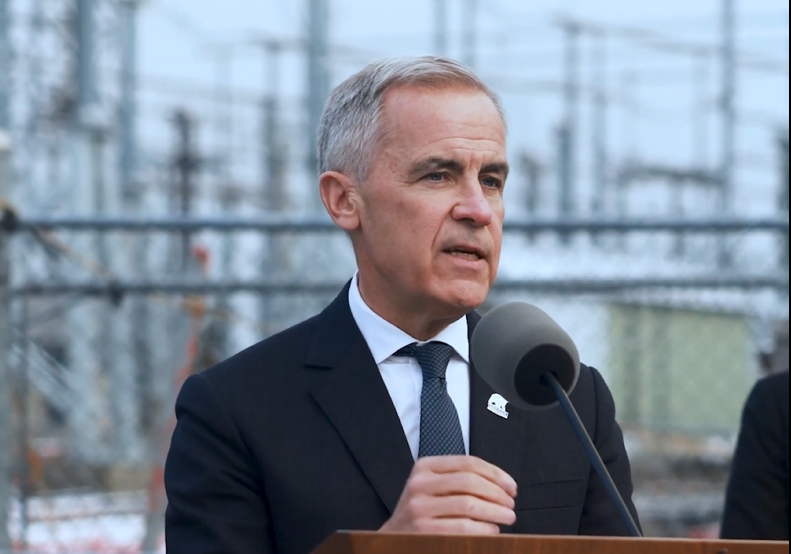
‘If we get it wrong, Canadians will pay higher utility bills,’ Prime Minister Mark Carney said in announcing a National Electricity Strategy. / SCREENSHOT
Prime Minister Mark Carney unveiled a major shift in Ottawa’s energy policy on May 14, announcing plans for a National Electricity Strategy aimed at doubling Canada’s electricity grid capacity by 2050.
The federal government said the transition will require an estimated $1.3 trillion in investments over the next two decades, though Ottawa has not yet detailed how much it will contribute. Four months of consultations with provinces, utilities and Indigenous communities will begin immediately, with the government aiming to introduce next steps this fall.
The strategy is expected to deliver up to $15 billion in energy savings over 25 years and will focus on four key priorities: expanding electricity generation, building more East-West transmission lines, training skilled workers and increasing domestic manufacturing for energy infrastructure projects.
“If we get it wrong, Canadians will pay higher utility bills,” Carney said. “If we’re too timid, Canadians will end up short of power, losing good jobs and growing reliant on foreign suppliers.”
As Canada looks to strengthen its industrial capacity amid trade tensions with the United States, Carney also signalled a softer approach to some federal climate policies.
He said Ottawa plans to ease Trudeau-era Clean Electricity Regulations to give provinces greater flexibility to rely on natural gas-generated power in the short term.
“There’s no credible path to net-zero without a relentless focus on affordability,” Carney told reporters. “That’s why we intend to adjust the Clean Electricity Regulations, keeping energy reliable and affordable in the short term as we shift to cleaner energy at scale over time.”
Carney said natural gas would still play a smaller role compared with planned investments in hydroelectricity, nuclear power and renewable energy.
The move marks another rollback of federal climate policy. Asked whether his government would still meet Canada’s emissions-reduction targets, Carney said Ottawa would update its climate plans and targets “in due course.”
Dale Beugin, Executive Vice President of the Canadian Climate Institute, said in a statement that the plan was moving in the right direction, but doesn’t address several issues.
“Changes to the Clean Electricity Regulations could allow additional emissions-intensive gas-powered generation that delivers reliability via peaking power, but also opens the door to long-lived, high-emissions baseload power, undermining Canada’s climate objectives,” he said. “The strategy emphasizes the role of gas in affordability but underplays the growing opportunity from cleaner sources of system flexibility (such as storage, demand response, and interties) to help deliver affordable electricity rates.”