Feds invest $100 million to expand food production in rural and northern Canada
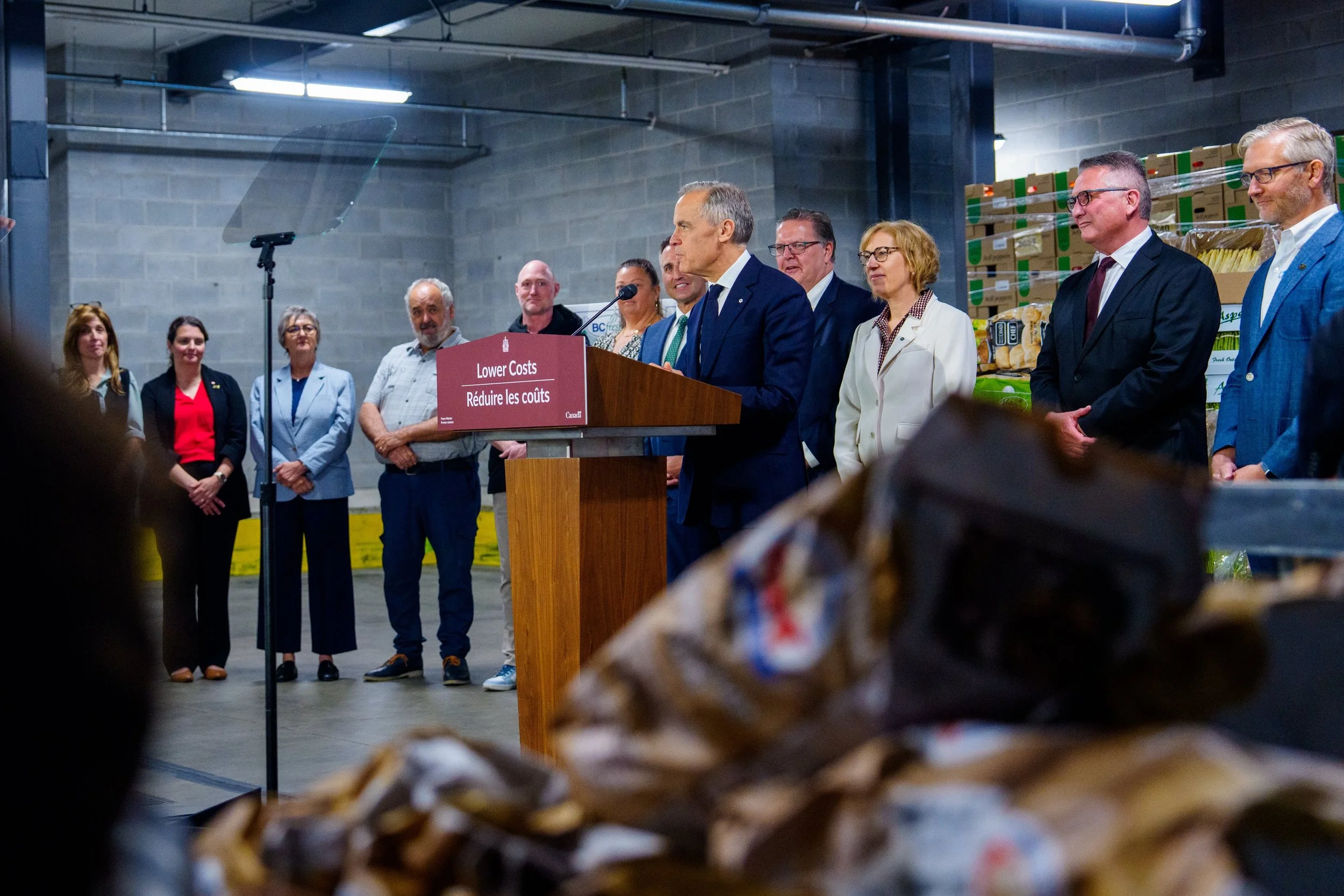
‘A country's sovereignty depends on its ability to feed, to fuel and defend itself,’ Prime Minister Mark Carney said when announcing the strategy on June 11. / TWITTER PHOTO
Rural Canada will benefit from a $100 million investment to expand local food production as part of the federal government’s National Food Security Strategy to reduce Canadian dependence on imported food, strengthen domestic processing capacity and improve access to affordable groceries.
“A country's sovereignty depends on its ability to feed, to fuel and defend itself,” Prime Minister Mark Carney said when announcing the strategy on June 11. “Right now, we're not fully in control of our food system. It's an over-reliance that's left us vulnerable to global shocks. To conflicts, droughts, tariffs. This strategy is about changing that. It's about putting Canadians back in control of what we grow, what we buy, what we put on our table.”
The funding over seven years will “support rural and northern communities to develop and implement solutions that work best to address their unique challenges,” the strategy says.
It also noted: “Food hubs are particularly important in rural and remote areas, including northern and Arctic communities, because they help overcome long distances and high transportation costs by consolidating local supply, reducing spoilage and improving reliable access to fresh, locally produced food.”
The strategy frames food affordability as both an economic and sovereignty issue, arguing that too much of what Canadians grow is sent abroad to be processed and sold back, while too many communities — particularly outside major urban centres — pay inflated prices for food that travels thousands of kilometres before reaching a shelf.
The Canadian Meat Council welcomed the strategy but said it did not provide details to address labour shortages in the food and agriculture sector.
“Many meat processors across Canada are unable to operate at full capacity due to persistent labour shortages,” President and CEO Kyle Larkin said. “This is not only affecting current production and Canada’s food security objectives, but is also constraining planned investments in facility expansion.”
The strategy, which invests $3 billion over 10 years, includes four objectives:
Spur grocery store competition and create more choice for Canadians
Invest $1 billion in food infrastructure to build new and expanded food terminals and hubs – helping independent grocers buy and move competitively priced products without relying on large retail chains.
Provide the Competition Bureau and Competition Tribunal with nearly $130 million to investigate, prevent and combat anti-competitive business practices.
Boost domestic food production across Canada
Launch a new $1 billion Agri-food Project Finance Fund through Farm Credit Canada (FCC) to provide seed capital financing for businesses to expand food processing capacity.
Establish a $150 million Food Security Fund to help small and medium-sized businesses upgrade their equipment to grow, produce and process more food in Canada.
Create a $100 million Collaborative Food Innovation Fund to help producers expand agri-food processing.
Grow fruits and vegetables year-round
Invest $750 million to drastically expand year-round Canadian production of fruits and vegetables, including through greenhouses, vertical farms and other enclosed growing spaces.
Cut red tape across the agricultural supply chain
Modernize key regulations; speed up approvals for seeds, feed, fertilizers and veterinary products; and reduce backlogs that slow down the system to reduce the regulatory burden on farmers and producers.
Help provincially licensed food businesses meet federal requirements so that a Canadian product made in one province or territory can more easily reach a shelf in another.
Carney highlighted that one in nine Canadians works in the agri-food sector, which is one of the world’s largest exporters. “Our farmers, our ranchers, our producers are selling more than $100 billion every year abroad. We're the largest producer of canola in the world. We account for nearly a quarter of global supply as a testament to our remarkable farmers across the country, including in the prairies,” he said. “We are an agricultural superpower, yet for most Canadians it doesn't feel like that at the checkout counter.”
Dairy Farmers of Canada (DFC) also welcomed the strategy and highlighted that supply management is “fundamental to Canadian self-sufficiency for dairy, egg and poultry products at stable prices.”
DFC also emphasized that quicker approvals for seed, feed, fertilizers and veterinary biologics will help increase productivity, competitiveness and innovation.
“In an era of increasingly uncertain global trading relationships, Canada’s dairy farmers are proud to continue playing a fundamental role in supporting a strong and resilient food system by ensuring a stable supply of high-quality nutritious dairy produced on Canadian farms,” said DFC President David Wiens.
The Fruit and Vegetable Growers of Canada (FVGC) agreed that timely access to crop inputs such as fertilizers and pest control products is essential to remaining globally competitive by managing pests, disease and growing yields.
“Growers support strong, science-based regulatory decisions that protect human health, food safety and the environment,” said FVGC President Marcus Janzen. “At the same time, Canada’s regulatory system must also recognize the practical realities of food production and the importance of maintaining access to the tools growers need to produce food sustainably.”
On removing red tape and modernizing regulations, Carney noted: “To build the food system that Canadians deserve, we need to get out of our own way. We'll modernize key regulations so that food security and affordability are considered alongside of safety.”
Tyler McCann, Managing Director of the Canadian Agri-Food Policy Institute, said that while Canada is food secure, it also faces risks. Speaking to the House of Commons Agriculture Committee before the food security strategy was released, he said it’s important to acknowledge the pressure the sector is under as a result of global trade instability.
“A reliable, sustainable, secure system is one where food increasingly moves across borders, is produced in increasingly innovative ways, in increasingly concentrated systems but [it] faces increasing volatility and risk,” he said in his opening remarks.
He made five recommendations to the committee:
Evolve approach to risk management so that farms have more choice; “double down on agriculture innovation” through an Agri-Food Innovation Strategy; remove fertilizer tariffs and secure the supply of critical inputs; support transportation infrastructure; and leverage procurement tools to support Canadian production, for example through the National School Food Program.
DFC said in a press release that “the commitment to promote Canadian food in public procurement is an important step toward strengthening domestic supply chains and supporting Canadian farmers and processors.”
Meanwhile, the Canadian Federation of Agriculture said the strategy must be implemented horizontally. “Food security cannot be addressed through a single department or program. It requires a coordinated, whole-of-government approach that aligns policies across transportation, trade, environment, innovation, labour and finance to support a resilient and competitive agri-food sector,” the CFA said in a press release.