Steinbach’s 1% downpayment success story shows potential of place-based solutions

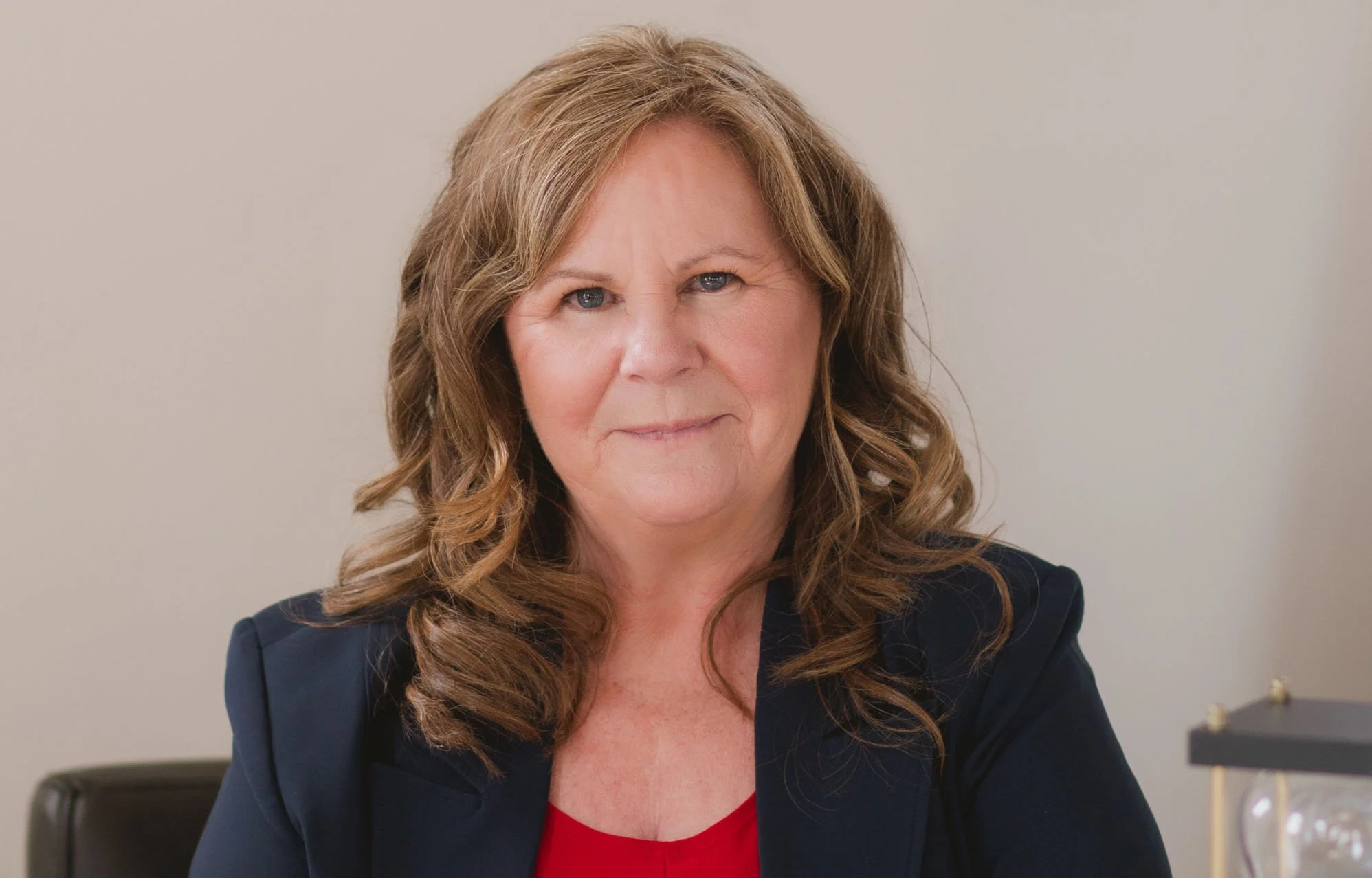
‘I get the sense that there's a generation coming up that really wants to do some nation-building, and that's important, but it's going to take collaboration, it's going to take commitment,’ says Margot Cathcart, President and CEO of the Rural Manitoba Economic Development Corporation. / SUBMITTED PHOTO
Lasting growth strategies can't be imposed from outside — they have to start with listening to, and partnering with, the communities themselves, says a rural Manitoba economic development leader.
“No one knows a community better than the community itself,” Margot Cathcart, President and CEO of the Rural Manitoba Economic Development Corporation (RMED), told The Rural Roundup, adding the starting point for any successful economic strategy "is listening and learning.”
That philosophy, Cathcart said, underpins RMED's approach to place-based economic development: building strategies around the specific strengths, values and needs of individual places rather than applying one-size-fits-all policy. She said the concept is gaining traction among provincial and regional economic organizations after years of being practiced without a formal label.
She cited several homegrown examples of place-based success, including a housing initiative in Steinbach where a local developer, contractor, and credit union partnered to solve a housing issue.
“They knew that there was a housing issue and it wasn't that people weren't making enough money to pay mortgages. It's that they couldn't save fast enough for a down payment, and so they addressed that by creating market quality homes. They didn't do the landscaping, and they didn't finish the basements … to keep the market price down, but allow for sweat equity to increase the overall value. They had a one per cent down payment. There was a vendor hold back until it reached a certain market value, and then they were able to release it into a more traditional mortgage,” Cathcart explained.
Taking a bit less so the community gets more
The result was the building and sale of almost 500 homes, with no lender take backs. “So it really takes communities and people that are willing to commit to that long-term vision for the betterment of their community,” she said. “everybody in that scenario took a little bit less so that the entire community got a little bit more.”
RMED was founded over five years ago to address a gap in existing economic development support. “The province at the time realized that they had economic development agencies, specifically supporting the city of Winnipeg, specifically supporting the north, but there was this massive part of the province that did not have an agency supporting them,” Cathcart said.
The organization defines rural Manitoba as everything south of the 53rd parallel, excluding the City of Winnipeg proper. RMED works closely with Winnipeg Economic Development and Tourism in the capital region, and with the Community Economic Development Fund (CEDF) north of the 53rd parallel, reflecting the reality that “economic development doesn't happen within lines and boxes.”
RMED partners with local economic development leaders — whether that's municipalities, an independent non-profit, an Indigenous community, or a regional agency — to build local capacity. “It's very much a concierge service where we look at the opportunity and the program to be able to figure out what it is,” she said.
Data as ‘passion project’
Among RMED's latest achievements is its investment in data and research, which Cathcart called "our passion project." The organization has built interactive community profiles for 137 communities across the province.
The profiles are built using a consistent methodology with the most granular data available, which provides investors with comparative data no matter where they land in the province. RMED has since expanded the approach to regional profiles, replacing static reports that were “out of date before they ever hit publication.”
The long-term goal, Cathcart said, is to build a Centre of Rural Data Excellence over the next three to five years.
The common thread in successful places, Cathcart said, is consistent local leadership. “You need to have strong local leaders. You need to have resiliency. You need to set a course of direction and you can't keep changing your mind because something didn't happen fast enough yesterday,” she said.
Cathcart said workforce shortages are a persistent challenge facing rural businesses — but she insisted it shouldn’t be treated as an isolated issue. “It's not as simple as saying, we need to solve the workforce issue. Because in order to solve workforce, you need to be able to look at all of these other dimensions," she said, citing training, immigration, childcare, healthcare and recreation as interconnected factors.
Easier to sell overseas than to next province
Interprovincial trade barriers remain a sticking point as well. Cathcart said it is sometimes easier for a Manitoba food producer to export overseas than to sell into a neighbouring province — a dynamic she believes needs to change to unlock rural growth.
Cathcart highlighted rural clean-tech companies exporting Manitoba-made environmental products around the world — in some cases to more than 40 countries. But she said outdated regulatory standards, particularly around procurement, are holding some of these innovations back.
Her message to governments navigating economic uncertainty is straightforward: “Continue to partner with rural communities and invest in the fundamentals to support long-term growth,” she said.
“I get the sense that there's a generation coming up that really wants to do some nation-building, and that's important, but it's going to take collaboration, it's going to take commitment. It's going to take people coming together, regardless of political stripes,” she said. “I'm optimistic.”