From Red Deer to Rocky Mountain House: Amber Mack talks local business
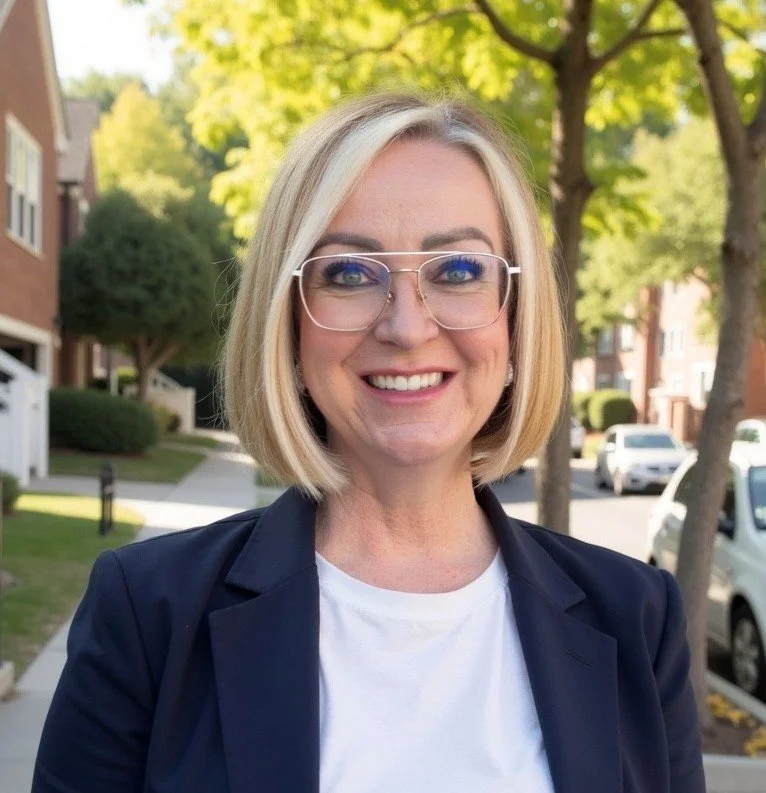
‘I'd love to see the conversation evolve from rural support to rural competitiveness,’ says Community Futures Central Alberta General Manager Amber Mack. / SUBMITTED PHOTO
Rural Canada is “fundamental” to economic growth, especially given the geopolitical and trade uncertainty the country faces, says Amber Mack, newly appointed General Manager at Community Futures Central Alberta.
“Rural Canada isn't simply important to economic growth, it is fundamental to it,” Mack told The Rural Roundup.
“Rural communities produce our food, generate energy, manufacture products, steward natural resources, drive tourism, and increasingly contribute innovation and technology. But beyond that, rural Canada produces entrepreneurs. It produces people who know how to solve problems, build relationships, and create opportunity where others might only see challenges.”
She said rural Canada is often overlooked and underestimated because it’s measured by population rather than economic contribution. “When you look at what rural communities contribute to Canada's economy, food security, energy security, exports and innovation, it's clear that investing in rural Canada is investing in Canada's future,” she said.
Prior to joining Community Futures Central Alberta, Mack served as the Chief Operating Officer at the Red Deer District Chamber where she helped to strengthen the region’s business community. She previously also served as the President of the Central Alberta Humane Society, was a founding member and former Vice Chair of Women for Humane Canada, and a founding member of the Rotary Club of Red Deer Urban Spirits.
Asked how Community Futures Central Alberta fits into the current economic landscape of geopolitical and trade uncertainty for businesses, Mack said it plays a “practical” role.
“National strategies are important, but economic growth ultimately happens community by community and business by business. Rural entrepreneurs don't build Canada's economy in the abstract, they build businesses in Penhold, Markerville, Olds, Rocky Mountain House, Didsbury, Sylvan Lake, and communities across our region,” she said.
Stepping into her new position was an easy fit as Community Futures aligned with her belief in community investment.
“Community Futures represents something I've believed for my entire career — that strong communities are built by people willing to invest in one another,” she said.
Mack said the Community Futures program has been supporting small business and rural economic diversification since 1986 and now has 267 offices across the country.
“I saw an opportunity to join a national network of dedicated professionals, and to steward an organization with an incredible reputation, a talented team, and a mandate that aligns deeply with my own values of collaboration, stewardship, and helping communities build their own capacity - one entrepreneur, one business, and one idea at a time."
She spoke to The Rural Roundup about the challenges and opportunities facing rural Alberta communities and businesses, the need for a rural lens on public policy and what her advice to Secretary of State (Rural Development) Buckley Belanger is when developing the Rural Economic Development Strategy.
The Q&A was edited for length.
RR: You previously served as Chief Operating Officer of the Red Deer & District Chamber of Commerce. While Red Deer is considered urban, you don't have to go far to get to rural Alberta. What were you hearing from business leaders in terms of what's needed for a thriving rural economy?
AM: I often joke that Red Deer is “rurban.” If I had to sum up what I heard from business leaders in one word, it would be certainty. More than almost anything else, businesses need confidence that they can make informed decisions about hiring, investing, and growing.
Business owners are remarkably resilient, but resilience shouldn't be confused with unlimited capacity. They can adapt to almost anything when they understand the rules, have access to skilled people, and can make informed investment decisions.
One thing I've learned is that economic development isn't a series of separate issues, it's a system. Housing affects workforce. Workforce affects investment. Investment fuels business growth. Access to capital matters, particularly in smaller communities. That's why collaboration matters so much, because no one organization can solve those challenges alone.
And one issue came up again and again: navigating the business support ecosystem. Entrepreneurs don't want to spend their time figuring out which door to knock on, they want to spend it building their businesses. The easier we make it to access the right support at the right time, the better the outcomes we'll see for entrepreneurs, businesses, and communities.
RR: What is the biggest challenge facing central Alberta communities? What is one public policy solution to address it?
AM: I think one of the biggest long-term challenges facing rural communities is attracting and retaining the next generation.
Too often, young people leave their communities to access education, training, or early career opportunities. And honestly, we want them to. We want them to gain skills, broaden their horizons, and build experience. The challenge isn't that they leave, it's making sure there are meaningful opportunities for them to come home if they choose.
Rural communities shouldn't have to choose between educating their young people and keeping them. We need policies that strengthen local entrepreneurship, support business succession, and expand access to education and applied training through institutions like Red Deer Polytechnic and Olds College. Those institutions are tremendous regional assets, and the more we can connect education with rural opportunities, the stronger our communities become.
We often talk about population growth as though it's something that happens to communities, when I believe that it's something communities help create. When people can build a career, start a business, find housing, raise a family, and contribute to their community, they're far more likely to stay - or to return. And honestly, that's where Community Futures fits in. Yes, we provide financing and business advice, but our mission is much broader than that. We're helping create the conditions where people can build a future in rural communities.
RR: What are some of the opportunities? Is there anything you're excited about?
AM: Central Alberta already has so many of the ingredients for long-term success. We have innovative entrepreneurs, world-class agriculture, advanced manufacturing, tourism, energy expertise, growing technology adoption, outstanding post-secondary institutions, and communities with a long tradition of collaboration. Those aren't aspirations — they're existing strengths.
What excites me most is how those strengths are beginning to intersect. We're seeing more collaboration between education and industry, more innovation in traditional sectors like agriculture and manufacturing, more people choosing entrepreneurship as a career, and more organizations working together to support businesses rather than operating in silos.
RR: The Rural Prosperity Group advocates for a rural lens on public policy, so that rural Canada is not an afterthought. Is this something you think is necessary?
AM: Absolutely. To me, good public policy starts with listening to the people who will actually live with it. That's not about asking for special treatment, it's about recognizing that different realities require thoughtful solutions.
Rural communities often operate under very different conditions than large urban centres. Population density, distance, workforce availability, transportation, access to services, and the capacity to deliver programs all shape how policy works in practice. Recognizing those differences doesn't create inequality; it helps ensure policies achieve the outcomes they were designed to deliver.
The goal of good public policy should always be equitable outcomes, not identical approaches, and the closer policy is shaped by the people and places it affects, the more effective it will ultimately be.
RR: What are you reading these days?
AM: I am currently reading “Everyday Habits for Transforming Systems: The Catalytic Power of Radical Engagement” by Adam Kahane — a fellow non-profit leader in our community that I respect. I highly recommend it.
RR: The government is working on a Rural Economic Development Strategy. What's your advice to Rural Economic Development Secretary of State Buckley Belanger?
AM: The government has already taken an important first step by recognizing that rural Canada deserves its own economic development strategy. Creating a dedicated Minister of Rural Economic Development signalled that rural issues are not simply regional issues, they are national economic issues. Secretary of State Belanger now has an opportunity to build on that foundation by continuing to listen and helping shape policies that reflect the realities of rural communities.
One of the strengths of the current strategy is that it recognizes there is no one-size-fits-all approach. Rural communities understand their own strengths, challenges, and opportunities better than anyone else, so the best policies are developed alongside the people who will ultimately implement and live with them. My advice would simply be: keep listening.
I'd love to see the conversation evolve from rural support to rural competitiveness. Rural communities have never lacked ideas, resilience, or entrepreneurial spirit. Prosperity isn't something governments deliver to communities, it's something communities create when the right people, organizations, and conditions come together. National policy should recognize those strengths and help them flourish.