Moving the needle on pipelines
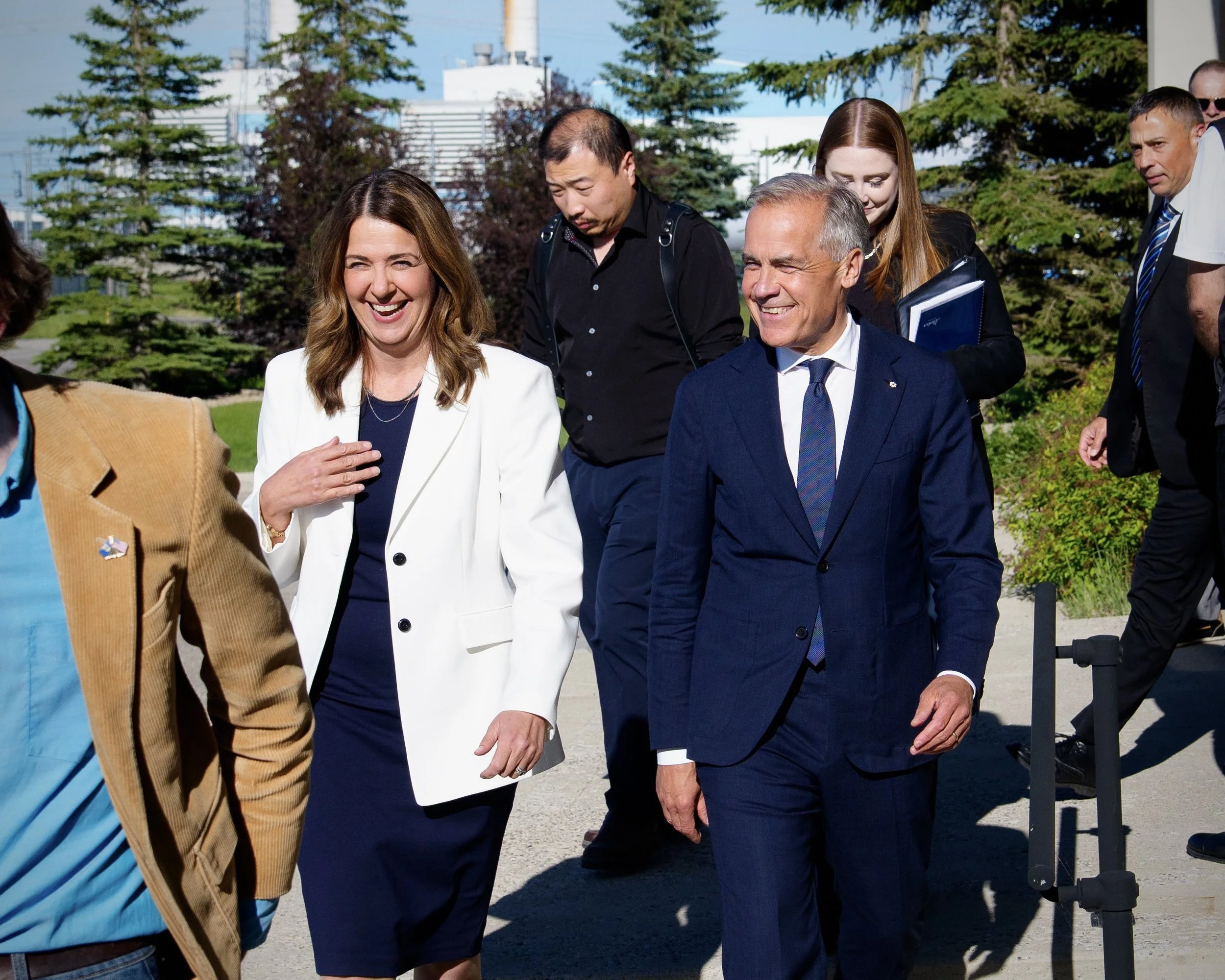
‘Canada and Alberta will be equal partners in this project, and there will be a meaningful ownership stake for Indigenous communities,’ Prime Minister Mark Carney, pictured with Alberta Premier Danielle Smith, said about the new proposed pipeline going through Alberta and B.C. / TWITTER PHOTO
The federal and Alberta governments have signalled approval of a proposed new $30-billion-plus oil pipeline from Alberta to a southern B.C. port. It would be funded by the two governments and built by federally-owned Trans Mountain Corp.
The announcement came on a day when Prime Minister Mark Carney rewrote the pipeline politics that have gripped Alberta, Ottawa and the B.C. government for months.
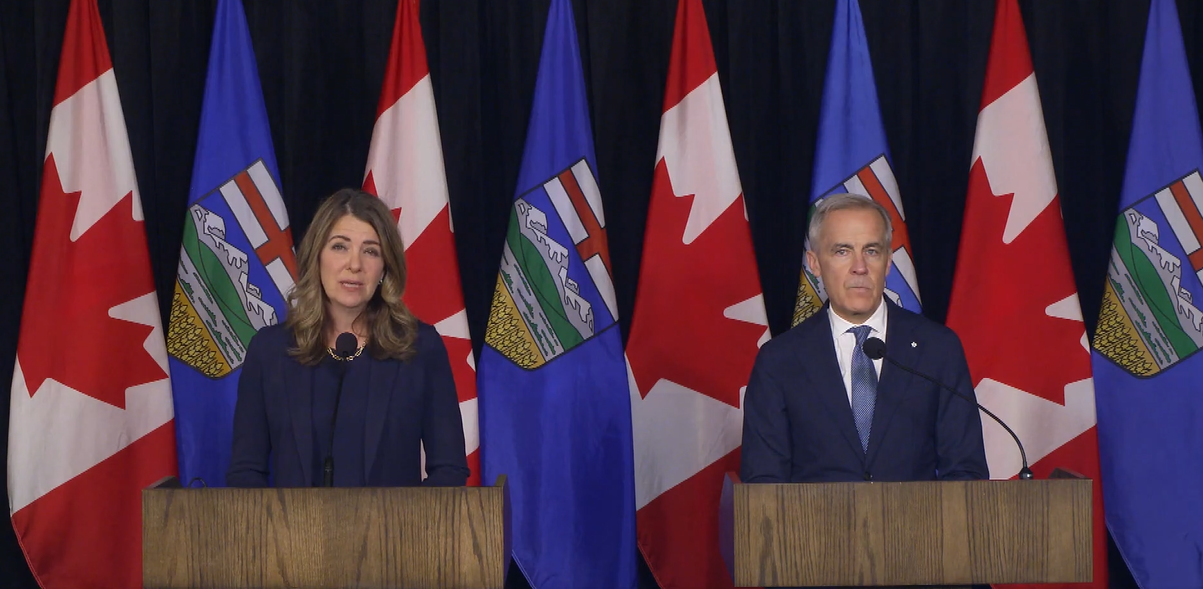
Carney, who was flanked at the announcement in Calgary by Alberta Premier Danielle Smith, said the pipeline proposal will be immediately referred to the federal government’s Major Projects Office for possible fast-track approval.
“Canada and Alberta will be equal partners in this project, and there will be a meaningful ownership stake for Indigenous communities,” Carney said.
Trans Mountain, a federal Crown corporation, was acquired by Ottawa in 2018 to build an expansion of its pipeline from Alberta to a Vancouver port. The expansion project was completed two years ago at a cost of $34 billion. Smith’s proposed new pipeline would largely follow the same route to southern B.C.
Details on the cost to federal and Alberta taxpayers weren’t specified in the announcement, but Alberta’s estimate for the new one-million-barrel-a-day pipeline put its cost between $35.2 billion and $43.7 billion. Construction would begin as early as 2027 and finish by 2034.
An investment, not an expense
Asked about the cost to taxpayers, the prime minister told reporters the government outlays to build the pipeline should be viewed as an investment — not an expense — because the existing Trans Mountain pipeline has been profitable.
Smith had previously been adamant about a pipeline route to a port on the northern B.C. coast, but that plan faced fierce opposition from regional Indigenous groups and Premier David Eby. Smith said Thursday the newly proposed route from Alberta to southern B.C. would benefit from using an existing pipeline corridor.
No private proponent to fund and construct an Alberta-to-the-coast pipeline has emerged. But Calgary-based Pembina Pipeline Corp. has agreed to take part in building the new conduit for a 10% stake in the project.
Carney and Smith said the need for the pipeline has been underscored in recent months by mounting interest in Canada as a reliable oil supplier from numerous countries facing energy turmoil as a result of the Iran war. Another pipeline would also boost the Canadian economy by opening new sales opportunities for crude exports to Asia, they said.
However, numerous hurdles remain, including consultations with Indigenous groups along the pipeline route and questions about oil companies’ commitments to use the new line and the needed level of future oil sands production to make the pipeline work efficiently.
Carney strikes ‘Cooperative Prosperity Agreement’ with B.C.
Earlier, Carney laid the groundwork for the pipeline plan by announcing a new multibillion-dollar Canada-British Columbia Cooperative Prosperity Agreement.
It will further accelerate the construction of major energy and trade corridors throughout the province, the federal government said in the announcement.
The package includes an estimated $20 billion in funding for forestry, mining, the expansion of the Massey Tunnel and Port of Vancouver in B.C.'s Lower Mainland and other programs. The memorandum of understanding with Eby would help unlock more than $150 billion in new investment, the federal government said.
In a key element of Ottawa’s energy-expansion plans for the two western provinces, Carney said the federal tanker ban on B.C.'s North Coast will remain in place.
Eby described the Canada-B.C. agreement as a "landmark, generational" deal that is about "building the kind of province we want ... for generations to come."
Of a proposed oil conduit through his province, Eby said: “We will not be going to court to fight a pipeline project. Instead, we will ensure we fulfill our constitutional obligations in good faith.”
“Pipelines are federal jurisdiction. That’s why this agreement matters. It ensures that the Northern Tanker Ban stays in place.”
Hailing the deal with Eby, Carney said access to Asia via B.C. ports is a vital part of the plan to expand and diversify Canadian exports at a time of disruption in traditional trade patterns.
“British Columbia is the lynchpin — the gateway to a more prosperous, sustainable and inclusive Canada,” the prime minister said. “This agreement is comprehensive. It is ambitious. And it will help transform the entire Canadian economy.”