
Carney pledges partnership as First Nations chiefs press Ottawa on water, land and resource projects
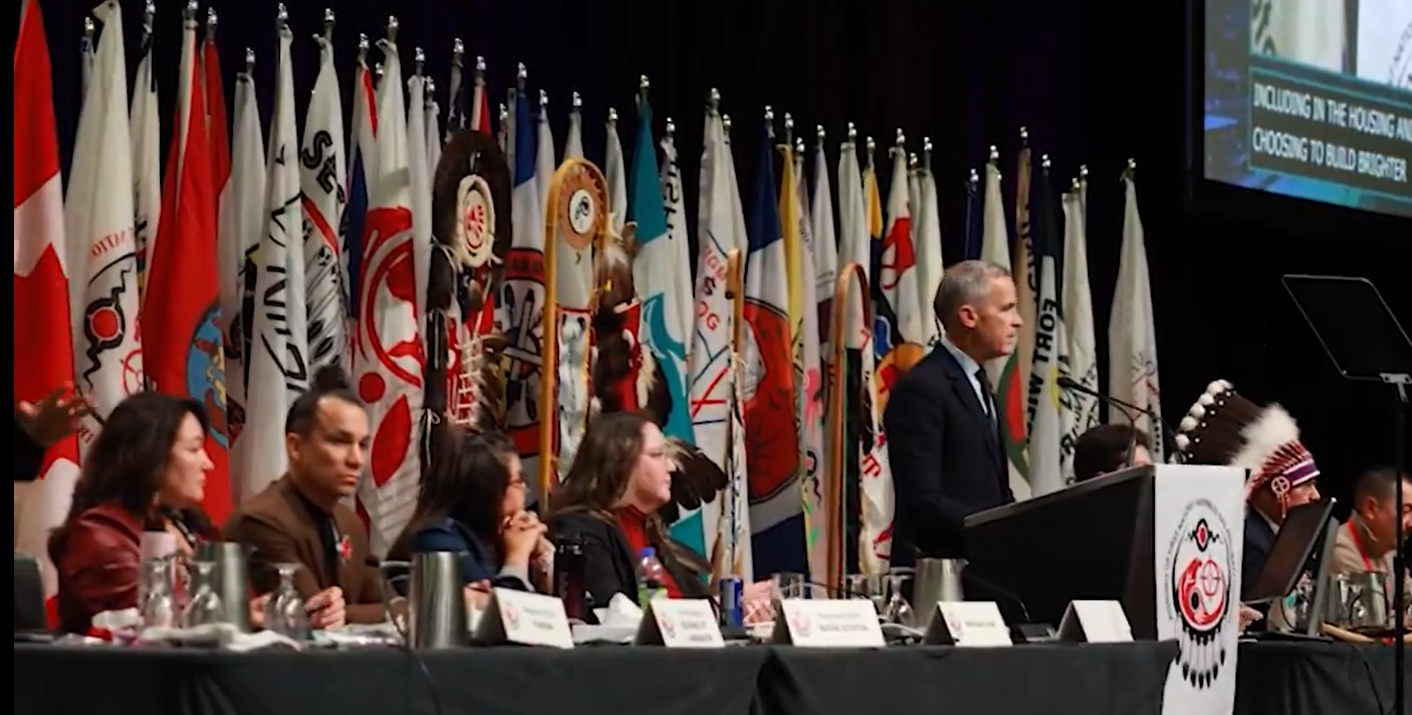
Prime Minister Mark Carney pictured at the Assembly of First Nations’ Special Chiefs Assembly. / SCREENSHOT
Prime Minister Mark Carney told the Assembly of First Nations’ Special Chiefs Assembly in Ottawa that his government is focused on “construction, trust, and partnership,” saying, “Canada’s new government is committed to working directly with you to build stronger nation-to-nation relationships.”
He framed his agenda as a shared effort, stressing that progress “must be informed by and can only move forward with First Nations,” and that “Indigenous equity and participation [are] a priority when it comes to building our country.”
Acknowledging criticism from earlier meetings, Carney said he heard clearly that partnership must include “respect for our determination and continued commitment to the Declaration of the United Nations on the Rights of Indigenous Peoples, as well as real and clear free consent.”
Defending Bill C-5, he said the Building Canada Act requires that projects in the national interest must, “by law, advance the interests of Indigenous Peoples,” while emphasizing, “None of this engagement counts as consultation.”
Chiefs used the question period to highlight ongoing failures, APTN reported. Neskantaga Chief Gary Quisess noted his community has lacked clean drinking water for more than 30 years, a situation Carney called “a failure.”
Pictou Landing First Nation Chief Tamara Young said, “What continues to hold us back are the same structural barriers, such as federal funding frameworks built on provincial standards,” while Wolf Lake First Nation Chief Lisa Robinson pointed to federal red tape undermining her community’s land base.
BC Regional Chief Terry Teegee reminded the prime minister that “our title is not a policy issue,” noting that chiefs had unanimously rejected a proposed bitumen pipeline and asking whether Ottawa truly respected free, prior and informed consent.
Carney responded that consultation must occur wherever projects affect treaty rights, agreed to meet with coastal First Nations leadership, and closed by acknowledging, “while outcomes have in many cases improved, there has not been as much progress as any of us would want.”