
Women entrepreneurs in the North face distinct social, cultural and geographic obstacles: PARO CEO
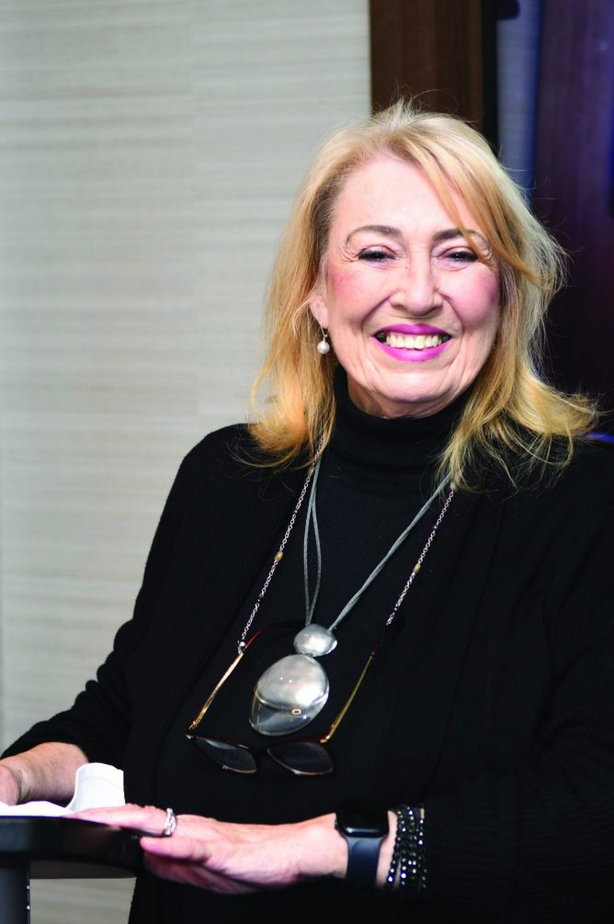
‘Finding ways to better support women entrepreneurs—including those in the North—is vital to Canada’s economic prosperity,’ says PARO CEO Rosalind Lockyer.
Women’s equality got a boost in this year’s federal budget with the government’s commitment to provide stable funding of $660.5-million over five years to the Department for Women and Gender Equality.
Now the government needs to give its Women Entrepreneurship Strategy a similar shot in the arm so it can address funding and policy shortcomings impacting women business owners in Canada’s North.
Women entrepreneurs in the North face distinct social, cultural and geographic obstacles. Eliminating them will require innovative federal funding and policy approaches that recognize the unique realities they face.
PARO Centre for Women’s Enterprise Canada recently brought together women business owners and self-employed women in Yukon to discuss challenges and how to solve them.
The meeting was part of roundtable discussions that PARO is holding in cities across the country—including Whitehorse, Vancouver, Calgary, Toronto, Ottawa, and St. John’s—to find ways to help women entrepreneurs thrive. We will be issuing a report on our findings next year.
Participants in Whitehorse identified key social and cultural barriers that hinder their ability to access business financing.
Too often they come up against policies that do not fully appreciate what women’s entrepreneurship looks like in practice.
Many women entrepreneurs in the North run small businesses or are self-employed, working in the arts, consulting, social enterprises or wellness work—ventures that often fall outside eligibility criteria for traditional grants and loans.
Many work part time while juggling caregiving responsibilities for their children or aging parents, putting them at a disadvantage when applying for funding that often favours full-time businesses able to quickly scale up.
The extensive documentation required for grant or loan applications is often too onerous for small business owners who operate their business part time or have solo ventures.
A strong cultural and emotional aversion to loans—arising from a history of systemic racism in financial institutions—also discourages Indigenous women entrepreneurs from submitting applications.
Women in Yukon spoke about fear of being denied loans, concerns about credit history and feeling uncomfortable being tied to rigid repayment timelines given the unpredictability of both family life and cash flow.
Many also pointed to systemic biases in society that still do not take women-owned businesses seriously— seeing them as just a hobby not worthy of funding.
Women entrepreneurs in the North must also contend with significant geographic hurdles, including the high costs of living and doing business there, limited access to suppliers, longer distances to markets, limited training and mentoring opportunities and difficulties accessing basic infrastructure like housing, education and health services.
Finding ways to better support women entrepreneurs—including those in the North—is vital to Canada’s economic prosperity given that they generate over $90-billion in annual revenues and employ almost one million people.
In Yukon, the Northwest Territories, and Nunavut, women-owned businesses account for about 23 per cent of all businesses, providing vital services and contributing to the territories’ economic bottom line.
Eliminating barriers to help them thrive will require revising funding systems so that they reflect the way women actually build and sustain businesses in the North.
Eligibility criteria for measuring success in funding decisions must be expanded beyond scale and staffing numbers to include qualitative indicators like social impact, community engagement and wellness outcomes.
The types of businesses eligible for grants must be broadened to include consulting, solo-venture wellness, education and part-time businesses.
Government loans and grants must be redesigned to make loan repayments less rigid and increase non-repayable grant options.
Grant reporting requirements must be simplified to reflect the capacity of small business owners and allow for narrative and impact-based reporting—like stories or outcomes—rather than only performance metrics.
More educational resources should be offered through a Women’s Business Learning Hub that provides low-cost or free training in areas like financial literacy, digital marketing and legal business basics.
There also needs to be an online portal that provides easy access to tools, templates, recorded training and grant application guidance, with resources specifically designed for self-employed and Indigenous women.
Women entrepreneurs should be full partners in developing these supports.
Women entrepreneurs in Canada’s North are not asking for handouts. They just want systems that work for— not agains—them.
It is time for the federal government to adopt innovative funding and policy solutions that recognize and respond to the realities of women entrepreneurs in the North.