
Forestry ‘anchors of local economies and services,’ says COFI president and CEO Haakstad
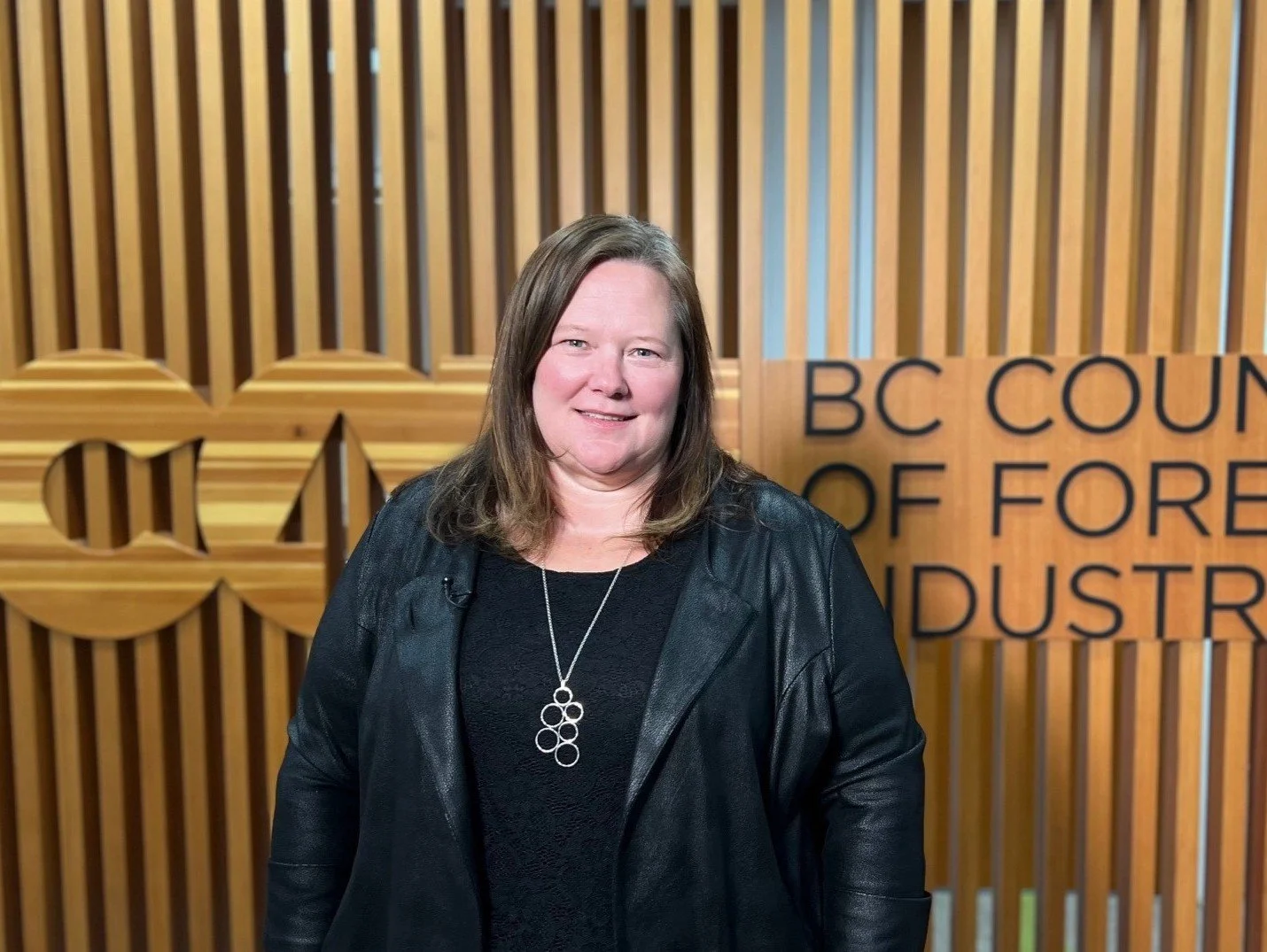
‘Healthy forests and strong communities go hand in hand,’ says Kim Haakstad, COFI President and Chief Executive Officer. / COFI PHOTO
Forest resilience and the survival of rural communities must be addressed together, the BC Council of Forest Industries (COFI) says, warning that sawmill and pulp mill curtailments and closures carry consequences far beyond the forest sector.
“Rural and small communities experience the impacts immediately when wood supply becomes unpredictable and mills are forced to curtail or close,” said Kim Haakstad, COFI President and Chief Executive Officer, in an interview with The Rural Roundup. “Our goal is to keep mills operating, as they are anchors of local economies and services.”
Mills play a critical role in sustaining rural British Columbia. “A mill is far more than a workplace,” Haakstad noted, pointing to the network of contractors, truckers, suppliers and service providers that depend on forestry operations. “When mills close, the economic and social impacts ripple quickly across the region.”
COFI represents British Columbia’s primary forest industry, a sector it says supports nearly 50,000 direct jobs and contributes $17.4 billion to provincial GDP. Nationally, the forest industry employs nearly 200,000 people and generates $87 billion in economic activity, spanning logging, manufacturing, bioenergy and emerging wood technologies that link rural and urban economies.
The sector is currently facing significant headwinds, including trade disputes that have resulted in a combined 45% duties and tariffs. Those pressures come amid recent mill closures in B.C., prompting calls for urgent action from both provincial and federal governments.
Haakstad emphasized that strengthening forest sector and community resilience will require policy changes that enable faster decisions and more active management.
While Haakstad said COFI appreciates recent federal measures such as enhanced liquidity supports and expanded employment relief programs, she noted that “the long-term solution remains a negotiated softwood lumber agreement.” In the near term, COFI is urging British Columbia to improve competitiveness by ensuring predictable and economic access to logs, reducing regulatory burdens and supporting First Nations capacity to advance land-use planning and partnerships.
COFI also sees opportunity in growing domestic and global demand for low-carbon building materials. “Any efforts to increase domestic use of wood are helpful,” Haakstad said, noting that wood-based modern methods of construction can significantly reduce build times and emissions while lowering long-term operating costs.
Innovation remains central to the industry’s future, Haakstad said, highlighting advances in mass timber, modular and offsite light wood frame construction, and the bioeconomy. Sustainability metrics, including harvesting just 0.33% of forests annually and planting three trees for every one harvested, underpin B.C.’s global reputation for responsible forest management.
At its annual convention this April, COFI plans to reinforce the message that “Forestry is a solution” — to housing, wildfire mitigation, reconciliation and economic development. “At a time of crisis, it is important for governments, industry, and local communities to come together, build partnerships, and leverage the strengths of the sector,” Haakstad said.
“Healthy forests and strong communities go hand in hand,” she said, adding that predictable wood access and a competitive operating environment are essential to sustaining the rural communities that depend on forestry.