‘Real opportunity’ for Canada, U.S. to be fertilizer independent, says Carney
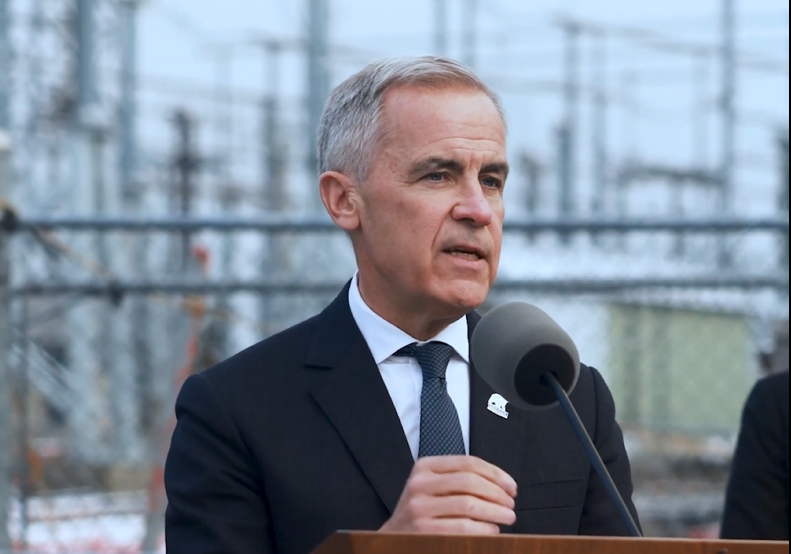
‘I wanted to do a one-two punch and get some more accurate information and push the telecom companies to provide more transparency in their maps, and then also work to plug some of those gaps,’ says Conservative MP Andrew Lawton who recently launched the Cellular Connectivity Project. / ANDREWLAWTONMP.CA PHOTO
Canada and the United States should work together to become self-sufficient in fertilizer, Prime Minister Mark Carney said after U.S. President Donald Trump briefly raised the possibility of importing potash from Belarus.
Canada currently supplies the vast majority of the potash used by American farmers. “I think that there is a real opportunity, if we so choose – and it’s one of many, many opportunities that Canada and the United States have to co-operate – to become fertilizer independent,” Carney said.
“That would be good for Canadian farmers. It would be great for American farmers, and it’s an opportunity we’re prepared to explore.”
Carney’s comments came after Trump said on social media that the United States was working on a “massive Deal” to purchase potash from Belarus at a lower price than what the country currently pays Canada.
But Trump backed away from the proposal during a meeting at the United Nations in New York.
“We’ll continue to go with Canada, but Belarus would like to sell it for a much lower price,” Trump said.
Saskatchewan Premier Scott Moe said a major shift to Belarus was unlikely, pointing to the country’s existing commitments and Saskatchewan’s established infrastructure.
“It wasn't realistic,” Moe said.
“[Belarus is] shipping all of their potash east, not to the Western world, and that's been indicated to be the case.”
Belarusian President Alexander Lukashenko has also indicated that his country could not supply all of the United States’ potash needs for 2026 because its production is already contracted.
Josh Linville, an analyst with StoneX, said the impact of a Belarusian deal could be limited.
“We have not struggled to find potash,” Linville told Thomson Reuters. “We have more than enough to go around. It is phosphate and nitrogen that we need help with.”
In Saskatchewan, officials and industry representatives have expressed confidence in the province’s potash sector. Allan Mayor Jordan Hafichuk said demand for the mineral remains strong.
“Everyone needs (potash) if they want to grow food, so, I think it’s a commodity that is worth a lot to a lot of people,” Hafichuk said.
University of Saskatchewan professor Devan Mescall said Belarus could replace some Canadian potash in the U.S. market, but not the entire Canadian supply.
“Belarus may replace some of the Canadian potash in the U.S. market, but it can’t realistically replace Canada as a whole,” Mescall said.