Arctic ‘no longer a low-tension region,’ says Anand
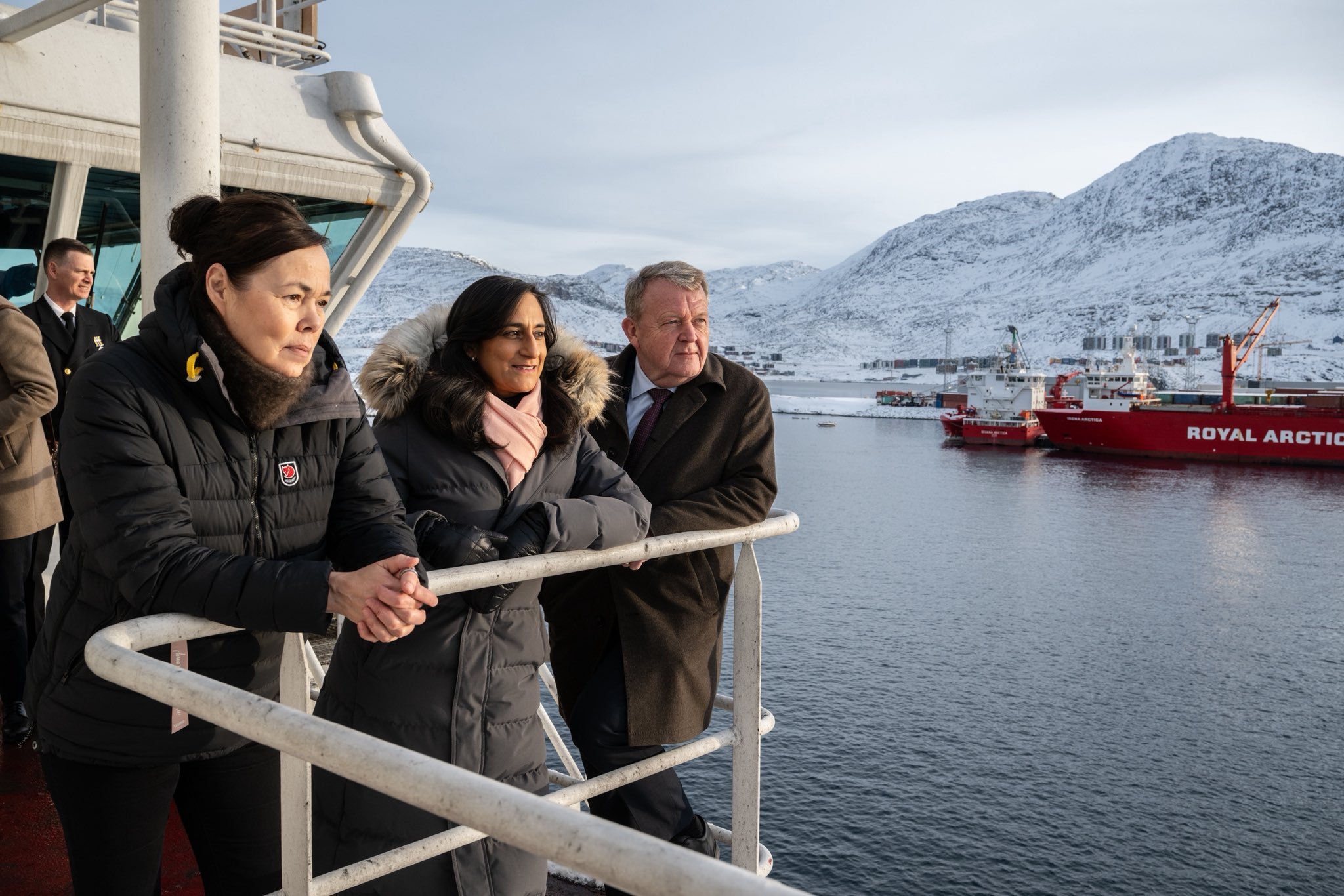
‘Defending the Arctic is a priority for our government. Today, I visited the Joint Arctic Command and the CCGS Jean Goodwill, a Canadian Coast Guard icebreaker, that has recently arrived in Nuuk, highlighting the importance of strong capabilities and close coordination to keep the region secure,’ Foreign Affairs Minister Anita Anand wrote on social media. / TWITTER PHOTO
The Arctic is the “front line of strategic competition,” says Foreign Affairs Minister Anita Anand, who emphasized the importance of surveillance and satellite capabilities in protecting the North.
Speaking at the Arctic360 Conference on Feb. 11 in Toronto, Anand noted increased Russian activity north of the Arctic Circle, including dual-use infrastructure like airfields and radar sites. “The Arctic is no longer a low-tension region,” she said.
Citing the invasion of Ukraine, she said “the Arctic is the front line of strategic competition, and these developments remind us of how quickly the dynamics can shift in a certain way.”
She emphasized that sovereignty and economic interests, especially in critical minerals and energy, are now closely linked, with foreign investment raising the strategic stakes:
“The military strategic decisions we are making about protecting the sovereignty and securing the Arctic are really hand in hand with economic considerations. Other countries have great interest in a Canadian object, from a critical mineral standpoint, from an energy standpoint."
Anand said the government is establishing a satellite ground station there that will strengthen secure communications and early detection capabilities across the North, supporting both military operations and northern communities. Paired with early warning aircraft equipped with advanced sensors, the station enables detection of threats over large areas and allows Canada to respond more quickly and operate longer in the North.
Defence investment strategy
In addition to satellites and security, Anand outlined key defence investments:
The government has committed more than $800 million allocated to Arctic military security capabilities.
Monetizing Canada’s naval fleet: 12 submarines and 15 surface combatants in progress, alongside Arctic and offshore patrol ships.
NORAD modernization: Ongoing since 2023, including a commitment to the Over-the-Horizon radar
Early warning aircraft and new helicopters designed for extreme northern conditions. “They ensure that Canada can detect earlier, move faster, and operate longer.”
Speaking about the strategic stakes, Anand emphasized, “We are going to reach NATO’s five per cent by 2035.”
Alliances and Indigenous partnerships
Anand emphasized that Canada’s Arctic strategy blends formal diplomacy with ongoing “soft diplomacy,” engaging Nordic partners, businesses, and think tanks to advance strategic interests. She highlighted the importance of two-way foreign investment, noting that “security, economic interests, and trust go hand in hand” in shaping Arctic policy. Sovereignty in Inuit Nunangat is exercised in partnership with Indigenous peoples. “Policy in the Arctic must be co-developed with Indigenous and northern communities; their knowledge is essential to national security,” said Anand.
“Canada will not outsource our sovereignty,” she said, underscoring the need for integrated investments to keep the North secure and sovereign.