Indonesia trade deal could bring gains for rural Canada: Sidhu
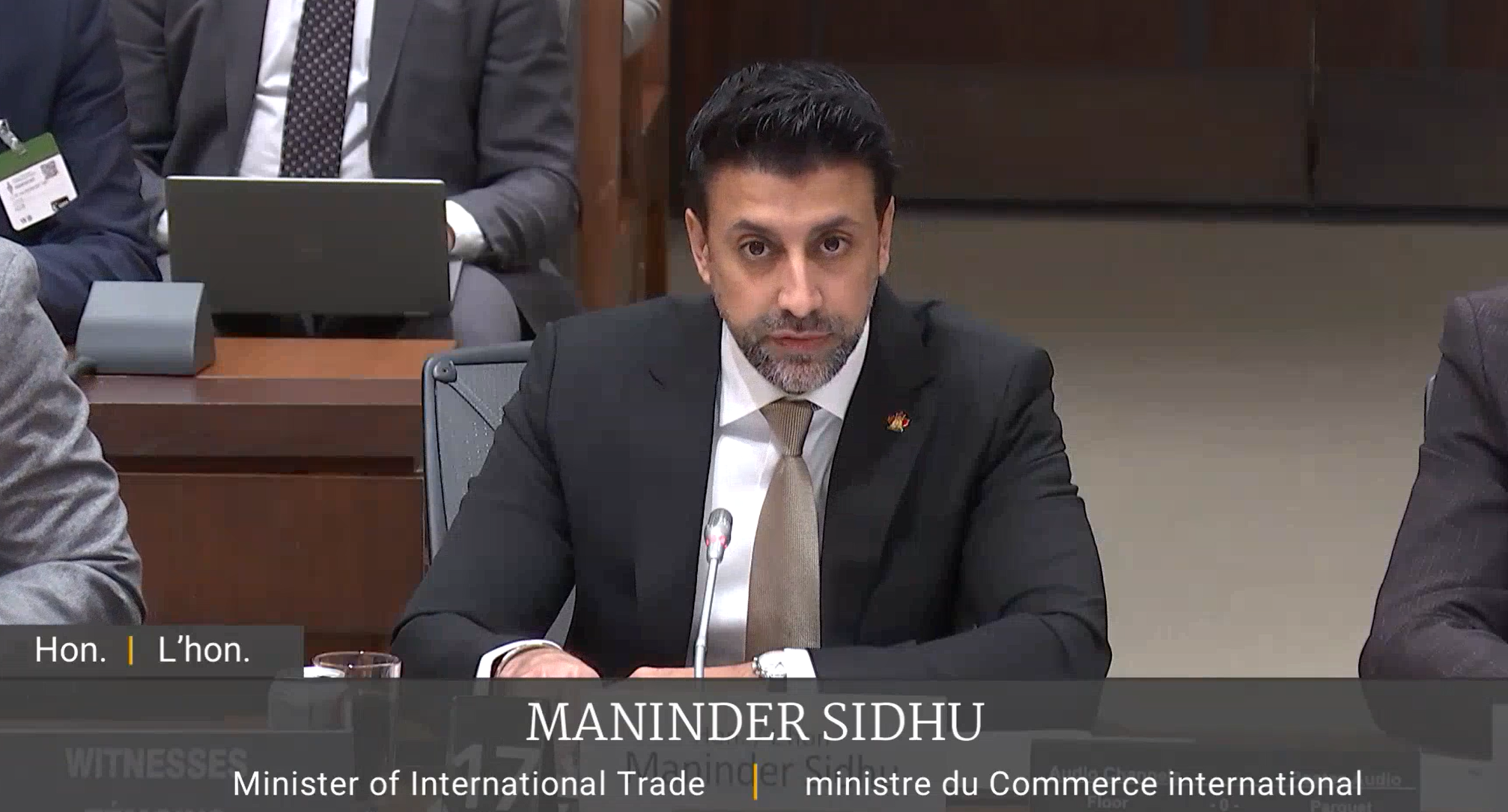
‘This agreement is also about Canada's long-term future in the Indo-Pacific, one of the fastest-growing regions of the world,’ International Trade Minister Maninder Sidhu told the House Trade committee. / SCREENSHOT
Canada’s proposed free trade agreement with Indonesia could deliver significant benefits for rural farmers, food producers, manufacturers and energy workers across the country, International Trade Minister Maninder Sidhu told MPs on Feb. 5.
“When I talk about the agri-food sector, it's about the farmers, but it's also in my neck of the woods, in Brampton. We have 9,000 people who work in that industry. There's huge potential opportunity in agriculture, agri-food, seafood, fisheries, but beyond that, in aerospace, mining and infrastructure,” Sidhu told the House of Commons international trade committee examining Bill C-18, the Canada-Indonesia Comprehensive Economic Partnership Agreement Implementation Act.
Sidhu said the Canada–Indonesia trade agreement reduces barriers, establishes clear rules and provides Canadian businesses with greater certainty to invest and expand in one of the world’s fastest-growing markets. It opens new export opportunities across key sectors including agriculture, agri-food, forestry, critical minerals, energy, clean technology, advanced manufacturing and services, he told the committee.
Additionally, he said, the deal is designed to improve market access, strengthen long-term economic partnerships and support job creation by linking Canadian producers directly to rising demand in Indonesia.
“This agreement is also about Canada's long-term future in the Indo-Pacific, one of the fastest-growing regions of the world. Strengthening our partnerships with Indonesia helps build resilient supply chains, deepens relationships with trusted partners and ensures that Canadian workers and businesses are connected to opportunities on every continent,” he said.
Conservative MP Jason Groleau, who sits on the committee, asked how the trade agreement benefits agriculture, which he noted is always a second thought .
“I come from a rural area where agriculture is important, and when we look at the facts and figures, we get the impression that agriculture is always left behind, whether in the Comprehensive Economic and Trade Agreement between Canada and the European Union or in the context of the United Kingdom’s accession to the new agreement,” he said. “What have you included in this agreement to ensure that beef and pork producers get their share of the market?”
Sidhu replied that Canadian beef exporters stand to gain new market access. “We have a big win for our beef producers in Canada,” he said. “For the first time in many years, Indonesia has now approved the registration of two Canadian beef establishments on their list of imports from Canada.”
He identified the facilities as JBS Canada and True North Foods, noting that together they support more than 3,000 jobs. Sidhu added: “Of course, they're processors, but for the farmers in your region, who will feed into this supply chain and then get it out to Indonesia, these are big wins for our beef farmers.”
Groleau also raised concerns about non-tariff barriers that could limit producers’ access to foreign markets. In response, Sidhu said the agreement includes “enforceable science-based sanitary and phytosanitary commitments” that provide “that stability, that reliability, but it also opens an avenue for discussion should non-tariff barriers continue to come up.”
Liberal MP Linda Lapointe, who also sits on the committee, asked how the agreement would benefit businesses and workers in her Quebec riding of Rivière-des-Mille-Îles, which includes aerospace, manufacturing, technology and agri-food processing sectors.
Sidhu said Indonesia represents a rapidly expanding market for Canadian food exports, pointing to trade figures that highlight the potential scale of growth. “Our agri-food exports around the world amount to roughly over $100 billion, and that includes seafood and fish sectors as well,” he said, adding that “Indonesia imported about $39 billion in agri-food and seafood in 2024 alone.”
Under the agreement, he said, “CEPA phases out tariffs on products such as beef and pork, pulses, potatoes, fruits and, of course, pet food.”
Sidhu also read statements of support from industry groups, including the Canadian Meat Council and Canadian Pork Council, which represent more than 7,000 farms and processing facilities. One statement said the deal “represents a significant opportunity for Canada's meat industry to expand its presence in one of the largest and fastest-growing markets in the Indo-Pacific region.”
Turning to aerospace, Sidhu said the agreement could help secure jobs in Quebec’s major manufacturing hubs.
Sidhu emphasized that the agreement’s impact would extend beyond major cities and export hubs. “At the heart of this, it all comes back to workers on the ground across Canada, in communities in Quebec and all across Canada,” he said.
Groleau noted that in the government’s talk of trade diversification, U.S. tariff-affected sectors like forestry and steel are being forgotten. “The issue that no one dares to address is the American tariffs on lumber and steel. We don’t hear about it anymore. It no longer seems to be your priority. Why is that? In our region, Chaudière-Appalaches, 8,000 jobs are directly linked to the lumber industry,” he said. “When will there be an agreement with the Americans on lumber?”
In response, Sidhu said that it’s still a priority for the government. “We all know the facts. They're our largest trading partner. They're an important trading partner, and we'll continue having conversations with them,” he said. “At the same time, this agreement opens up opportunities for the lumber industry in Indonesia. .... Are there challenging times that we're going through? Absolutely, I agree with you. I've talked to many workers. I've talked to businesses on the ground. My commitment to those listening is that we'll continue to diversify our markets so they're able to send products out to different markets.”